

Engagement Rings


What Makes ATERNA® Gen 4 Different
Some gemstones are beautiful. ATERNA® Gen 4 is extraordinary.
Born from one of the rarest minerals in nature and elevated through three months of precision engineering in our Canadian laboratories, every ATERNA® Gen 4 stone is a masterpiece of modern gemology. D/E colourless. 9.50 Mohs hardness. Ideal cut. Extraordinary fire.
This is not a diamond alternative. This is a diamond-grade gem in a category of its own.
What Is ATERNA® Gen 4?
Not standard moissanite. Something far beyond it.
ATERNA® Gen 4 is Quorri's exclusive, proprietary Diamond-Grade Moissanite — a next-generation evolution of the Silicon Carbide crystal family, engineered from the ground up for superior performance. While standard moissanite has remained largely unchanged, our team spent years developing a proprietary Gen 4 formula — a unique blend of SiC and 50% carbon — that delivers harder, more colourless, and more brilliant stones than anything standard moissanite can offer. The result is a gem that doesn't just compare to a mined diamond. In many ways, it surpasses it.
9.50 Mohs
Extraordinary Hardness
Second only to a diamond. Harder than sapphire, ruby, and standard moissanite.
D/E Grade
Top Colourless
Created at the absolute finest end of the GIA colour scale — D/E colourless.
100%
Light Capture
Hand-cut to Ideal proportions by master cutters for maximum brilliance and fire.
How ATERNA® Gen 4 goes beyond standard moissanite
✓
Harder — 9.50 Mohs vs standard moissanite's 9.25 Mohs, for greater scratch resistance and everyday durability.
✓
More colourless — D/E colour grade vs standard moissanite's H–J near-colourless, for a purer, more radiant appearance.
✓
Permanently colourless under heat — standard moissanite can turn yellow when exposed to high temperatures. ATERNA® Gen 4 never does.
✓
Superior cut — every ATERNA® stone is hand-cut to Ideal diamond standards, while standard moissanite is typically cut to moissanite-only proportions that fall short of diamond-grade brilliance.
✓
Passes diamond tests — thermal conductivity, fog, and transparency tests. Standard moissanite often fails one or more of these.
9.50 Mohs vs standard moissanite's 9.25 Mohs, for greater scratch resistance and everyday durability.
D/E colour grade vs standard moissanite's H–J near-colourless, for a purer, more radiant appearance.
Standard moissanite can turn yellow when exposed to high temperatures. ATERNA® Gen 4 never does.
Every ATERNA® stone is hand-cut to Ideal diamond standards, while standard moissanite is typically cut to moissanite-only proportions that fall short of diamond-grade brilliance.
Thermal conductivity, fog, and transparency tests. Standard moissanite often fails one or more of these.

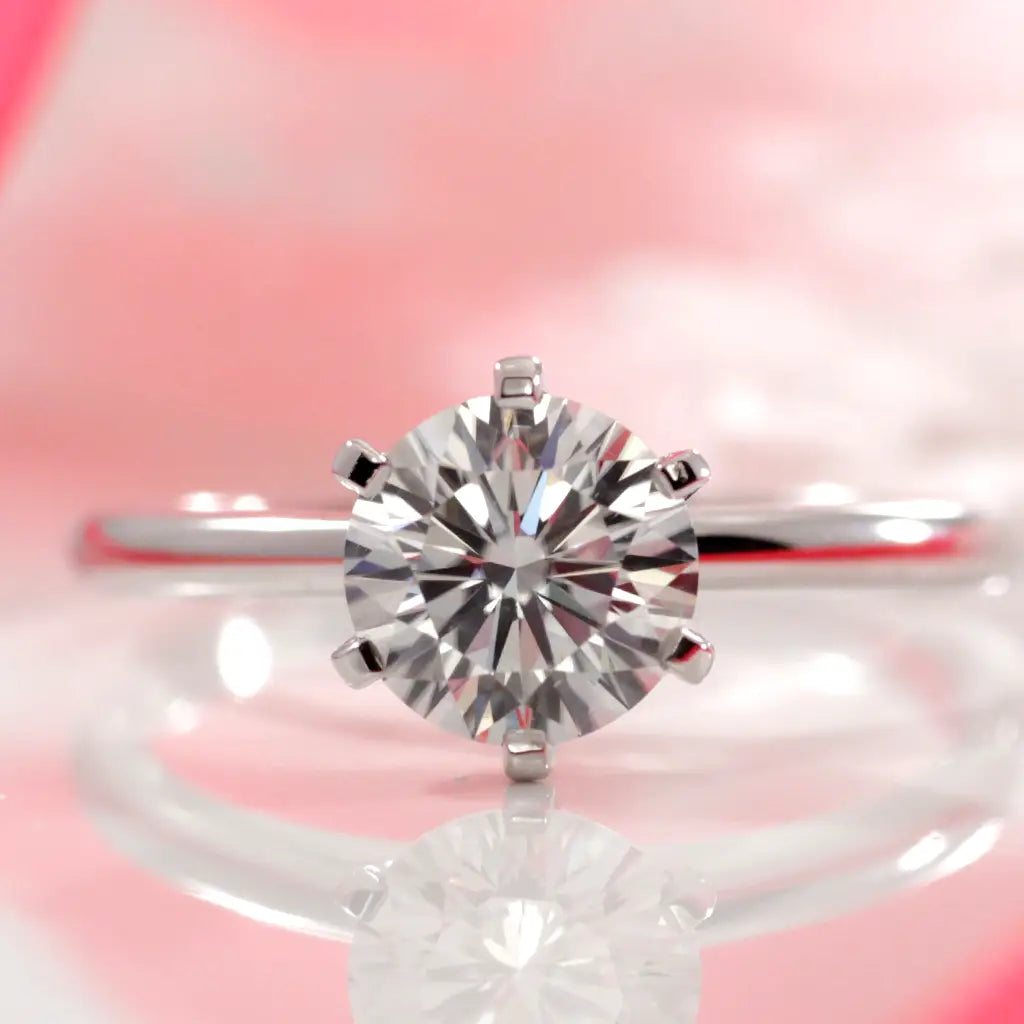
ATERNA® Gen 4 — Durability, Value & Diamond-Grade Brilliance
ATERNA® Gen 4 is luxurious in every way yet accessibly priced at a fraction of the cost of a comparable mined diamond — typically 70 to 80 percent less expensive for the same visual quality. For those seeking maximum beauty and value in an engagement ring or fine jewellery piece, ATERNA® delivers both without compromise.
With a hardness of 9.50 Mohs — the second hardest gemstone in the world after diamond at 10 Mohs — ATERNA® Gen 4 is harder than standard moissanite, sapphire, ruby, and emerald. Extremely resistant to scratching and abrasion, it is built for a lifetime of everyday wear. This exceptional durability is one of the primary reasons ATERNA® has become a leading choice for engagement rings. Looking for a certified lab-grown diamond instead? Explore our PURE® lab diamonds.

The Science Behind ATERNA® Gen 4 Diamond-Grade Moissanite
ATERNA® Gen 4 is created by Quorri using the latest HPHT — High Pressure High Temperature — advanced rough processing. This is the same foundational technology used to grow the world's finest lab-grown diamonds. Our proprietary process achieves a truly colourless, pure blend of Silicon Carbide and 50% carbon that gives each Gen 4 stone its 9.50 Mohs hardness and diamond-grade optical brilliance.
Creating a single ATERNA® Gen 4 stone takes up to three months — significantly longer than standard moissanite production. This is intentional. The extended growth period produces a denser, more structurally refined crystal with superior clarity and colorlessness that shorter processes simply cannot achieve.
Every stone then passes Quorri's stringent quality control and selection process. Only the highest-graded premium D/E colourless stones receive the ATERNA® Gen 4 designation — the rest are rejected. This uncompromising standard is what separates ATERNA® from every other moissanite on the market.
ATERNA® Gen 4 Colour Grading — Exclusively D/E Colourless
In diamond and diamond-grade gemstone grading, colour is one of the most critical quality factors. The less colour present in a stone, the more valuable, pure, and visually brilliant it appears. The absolute finest colourless stones achieve a D, E, or F grade on the international colour scale — a standard originally developed for diamonds and now applied to premium moissanite.
Every ATERNA® Gen 4 stone is exclusively created to D/E colourless grades — the top two tiers of the colourless range. Unlike standard moissanite which can carry subtle yellow or grey undertones, ATERNA® Gen 4 remains truly colourless under all lighting conditions including direct sunlight, indoor lighting, and high heat exposure. The result is unmatched purity, radiance, and a striking visual clarity that makes every ATERNA® stone indistinguishable from a fine colourless diamond to the naked eye.


ATERNA® Gen 4 Light Performance — Fire, Brilliance & Scintillation
Watch ATERNA® Gen 4 in motion — capturing light from every angle and transforming it into an intense display of fire, brilliance, and scintillation. ATERNA® has a refractive index of 2.65 to 2.69, compared to diamond's 2.42 — meaning more light is returned to your eye, creating a more intense sparkle than a diamond of the same size.
ATERNA® Gen 4 also produces more fire than a diamond that make a gemstone truly come alive under light. Combined with its ideal cut and D/E colourless grading, the result is a stone that commands attention in any setting, any lighting, any room.


ATERNA® Gen 4 Ideal Cut — Handcrafted for Maximum Light Capture
Every ATERNA® Gen 4 stone is cut by hand by Quorri's master cutters to strict ideal diamond proportions — the same cut standard applied to the world's finest diamonds. Cut quality is the single most important factor in a gemstone's brilliance. A standard stone cut too deep or too shallow leaks light from the bottom and sides, robbing it of the sparkle that makes it beautiful. With ATERNA® Gen 4 this never happens.
Our cutters achieve perfect symmetry and an increased surface area that allows ATERNA® to capture 100% of available light — returning every ray back to your eye as pure brilliance and fire. This level of precision takes twice as long to cut and polish as a standard moissanite stone. The difference is immediately visible. Every ATERNA® Gen 4 stone that leaves our facility is a handcrafted work of art built to the highest optical standard available anywhere in the market today.
How It Compares
ATERNA® Gen 4 vs Standard Moissanite & Diamond
A side-by-side look at what sets ATERNA® Gen 4 apart from standard moissanite and mined diamonds.
| ATERNA® Gen 4 | Standard Moissanite | Mined Diamond | |
|---|---|---|---|
| Physical Properties | |||
| Hardness (Mohs Scale) | 9.50 | 9.25 | 10 |
| Scratch Resistance | Excellent | Very Good | Excellent |
| Composition | SiC + 50% Carbon Blend | SiC | Pure Carbon |
| Contains CZ | No | Varies | No |
| Optical Performance | |||
| More Fire Than Diamond | ✓ | ✓ | ✗ |
| Ideal Cut Standard | ✓ | ✗ | Varies |
| Colour & Clarity | |||
| Colour Grade | D/E | Varies | D–Z |
| Stays Colourless Under Heat | ✓ | ✗ | ✓ |
| Diamond Tests | |||
| Diamond Tester | Mostly | Sometimes | ✓ |
| Fog Test | ✓ | ✗ | ✓ |
| Transparency Test | ✓ | Varies | ✓ |
| Value & Ethics | |||
| Cost vs Mined Diamond | Fraction | Fraction | Full Price |
| Conflict-Free | ✓ | ✓ | ✗ |
| Eco-Friendly | ✓ | ✓ | ✗ |
| Lifetime Guarantee | ✓ | Varies | Varies |
ATERNA® Gen 4
Physical Properties
Hardness (Mohs)9.50
Scratch ResistanceExcellent
CompositionSiC + 50% Carbon Blend
Contains CZ No
Optical Performance
More Fire Than Diamond✓
Ideal Cut Standard✓
Colour & Clarity
Colour GradeD/E
Stays Colourless Under Heat✓
Diamond Tests
Diamond TesterMostly
Fog Test✓
Transparency Test✓
Value & Ethics
Cost vs Mined DiamondFraction
Conflict-Free✓
Eco-Friendly✓
Lifetime Guarantee✓
Standard Moissanite
Physical Properties
Hardness (Mohs)9.25
Scratch ResistanceVery Good
CompositionSiC
Contains CZVaries
Optical Performance
More Fire Than Diamond✓
Ideal Cut Standard✗
Colour & Clarity
Colour GradeVaries
Stays Colourless Under Heat✗
Diamond Tests
Diamond TesterSometimes
Fog Test✗
Transparency TestVaries
Value & Ethics
Cost vs Mined DiamondFraction
Conflict-Free✓
Eco-Friendly✓
Lifetime GuaranteeVaries
Mined Diamond
Physical Properties
Hardness (Mohs)10
Scratch ResistanceExcellent
CompositionPure Carbon
Contains CZ No
Optical Performance
More Fire Than Diamond✗
Ideal Cut StandardVaries
Colour & Clarity
Colour GradeD–Z
Stays Colourless Under Heat✓
Diamond Tests
Diamond Tester✓
Fog Test✓
Transparency Test✓
Value & Ethics
Cost vs Mined DiamondFull Price
Conflict-Free✗
Eco-Friendly✗
Lifetime GuaranteeVaries
Compare all Quorri stone options to a mined diamond — PURE® lab diamonds, LUXE® Gen 3, and ATERNA® Gen 4 — in our full comparison guide.
View Full Stone ComparisonDoes ATERNA® Gen 4 Pass Diamond Tests?
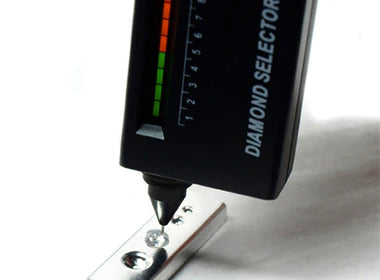
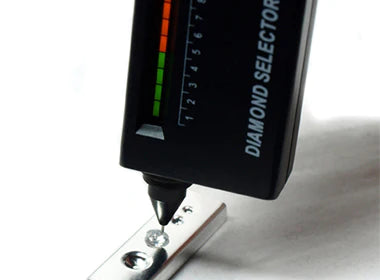
Positive Diamond Tester Result
On standard thermal diamond testers, ATERNA® Gen 4 can test positive due to its high carbon content and diamond-like heat signature. Advanced multi-testers with moissanite detection may distinguish them, which simply confirms what they are: premium Diamond-Grade Moissanite, engineered to the highest standard in the world. For buyers researching diamond-grade moissanite, this level of performance is unmatched by any standard moissanite on the market.
Passes The Fog Test
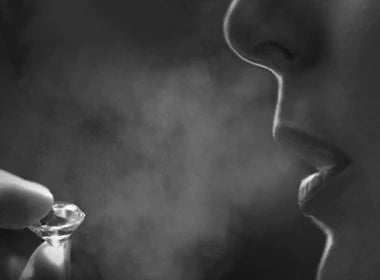
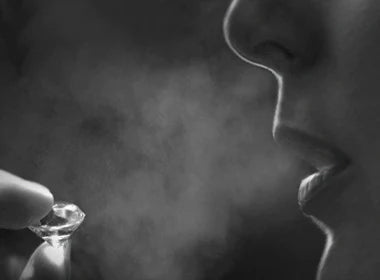
Diamonds conduct and disperse heat almost instantaneously. To test a stone, simply breathe on it the way you would fog a mirror and if it stays fogged for even a couple of seconds, it's unlikely to be a diamond. ATERNA® Gen 4 disperses the heat from your breath instantly, just like a real diamond, leaving no fog whatsoever. Standard moissanite frequently fails this test. ATERNA® Gen 4 never does.
Passes The Transparency Test
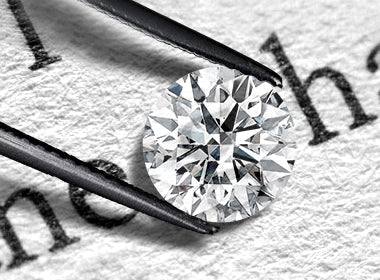
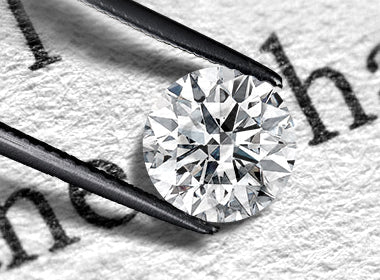
A genuine diamond refracts light so intensely that it is impossible to see through it. Even newspaper print held beneath the stone becomes completely unreadable. ATERNA® Gen 4 bends and refracts light so sharply that print beneath the stone disappears entirely, passing the transparency test with ease. This is a direct result of its Ideal diamond cut and advanced Diamond-Grade formula, a property standard moissanite cannot consistently replicate.


ATERNA® Gen 4 Testing Positive on a Diamond Tester
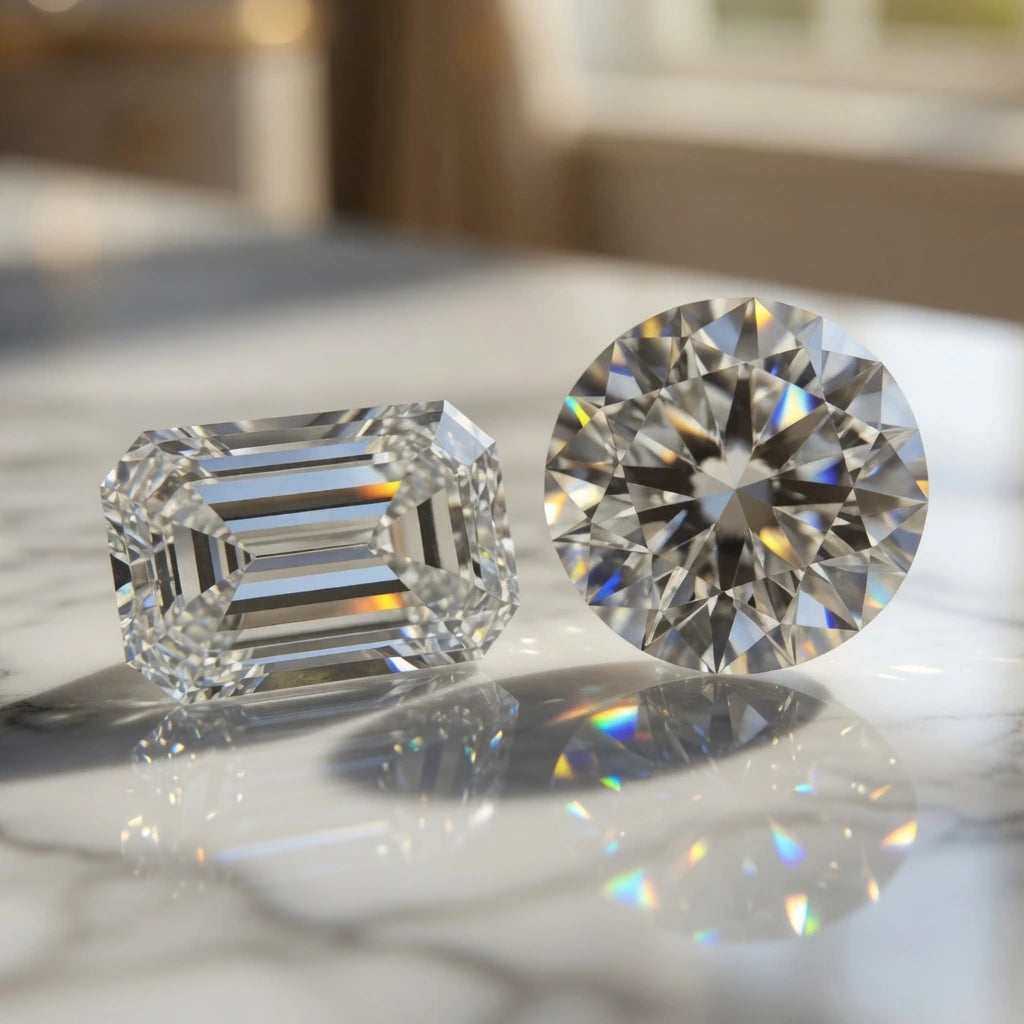
ATERNA® Gen 4 — Crafted to Perfection
Every ATERNA® Gen 4 stone is masterfully engineered through our proprietary advanced fusion process — elevating each stone beyond standard moissanite into a flawless expression of diamond-grade brilliance, exceptional durability, and modern artistry. From the three-month creation process to our stringent D/E colourless grading and ideal cut standard, every decision made in the production of ATERNA® Gen 4 exists for one reason: to deliver a gemstone that performs at the highest level available anywhere in the world.
Available exclusively through Quorri and handset in Canada in solid gold or solid 950 platinum by our master jewellers since 2006.
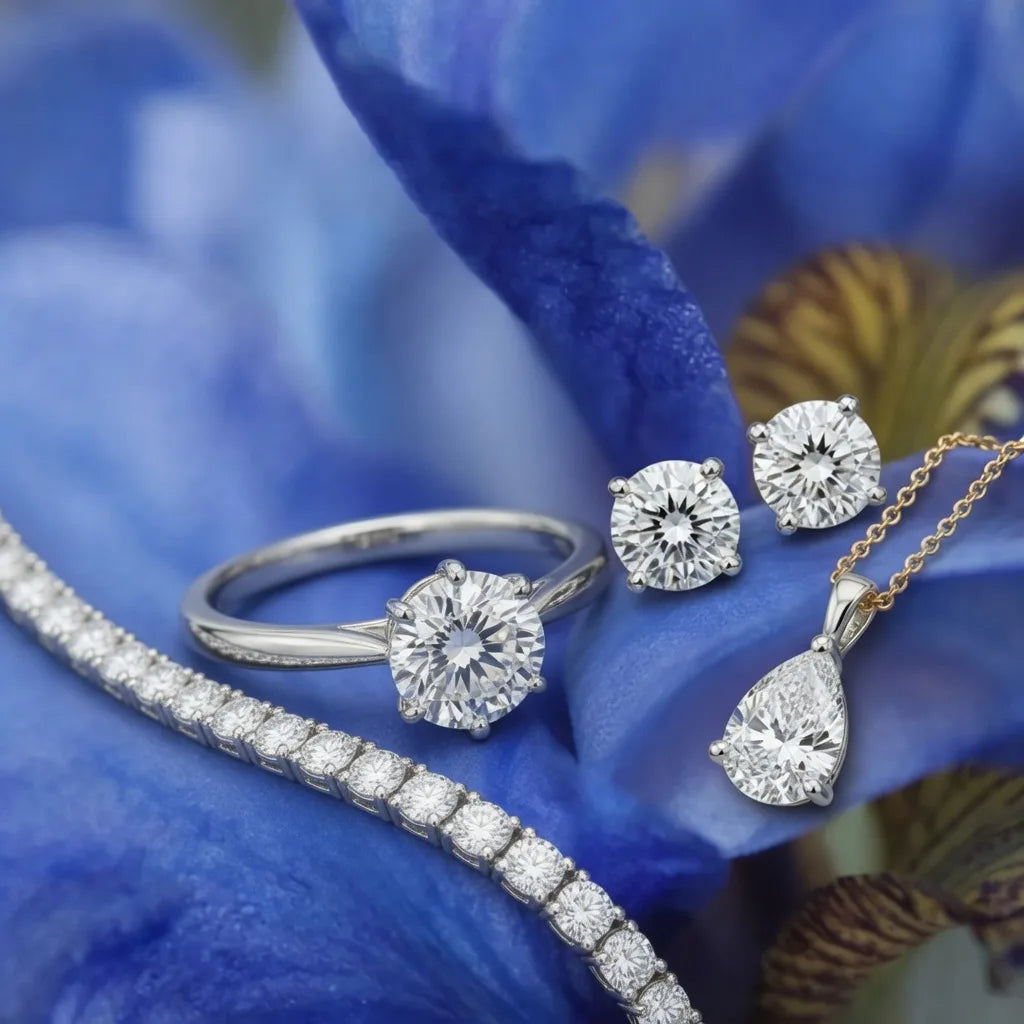
Ready to Experience ATERNA® Gen 4?
Canada's most advanced gem — exclusively available through Quorri. Handset in solid gold or platinum. Free shipping Canada-wide. Lifetime guarantee.


ATERNA® Gen 4 — Responsibly Eco-Friendly & Conflict-Free
Every ATERNA® Gen 4 stone is lab-created in a controlled environment — no mining, no land disruption, no involvement in conflict zones. While mined diamonds require tonnes of earth to be excavated for a single stone, ATERNA® is engineered entirely above ground using a process that eliminates the environmental and ethical concerns associated with traditional gemstone mining.
At Quorri, we believe extraordinary jewellery should never come at the cost of the planet or the people on it. Every ATERNA® Gen 4 stone is 100% conflict-free, ethically produced, and sustainably created — so you can wear it with complete confidence, knowing your choice reflects your values as much as your style. Learn more about how Quorri's PURE® lab diamonds and ATERNA® Gen 4 compare to mined diamonds.
ATERNA® Gen 4 — Frequently Asked Questions
-
While ATERNA® Gen 4 and standard moissanite both belong to the Silicon Carbide crystal family, ATERNA® Gen 4 is a next-generation proprietary reformulation engineered to be superior in every measurable way. ATERNA® Gen 4 has a hardness of 9.50 Mohs compared to standard moissanite at 9.25 — making it harder, more durable, and more resistant to scratching. Unlike standard moissanite which can yellow under high heat, ATERNA® Gen 4 remains truly colourless even when exposed to high temperatures. ATERNA® Gen 4 is also cut to ideal diamond standards, delivering extraordinary sparkle and diamond-grade brilliance that standard moissanite cannot consistently achieve. For Canadian buyers comparing moissanite options, ATERNA® Gen 4 is in a category of its own.
-
ATERNA® Gen 4 has a hardness rating of 9.50 Mohs — the second hardest gemstone in the world after diamond at 10 Mohs, and harder than standard moissanite at 9.25, sapphire, ruby, and emerald. This exceptional hardness makes ATERNA® Gen 4 extremely resistant to scratching and abrasion, ideal for everyday wear including engagement rings, wedding bands, and fine jewellery. A stone this durable will maintain its brilliance and clarity for a lifetime without deterioration — which is why every ATERNA® Gen 4 stone set by Quorri comes with a Lifetime Guarantee.
-
Yes. Quorri offers a stone upgrade policy that allows you to upgrade your ATERNA® Gen 4 stone at any time as your love story evolves. Whether you want to move to a larger ATERNA® Gen 4, upgrade to a PURE® IGI certified lab-grown diamond, or change the stone entirely, our Canadian design team will guide you through every option. Contact us for details and current upgrade pricing.
-
Every ATERNA® Gen 4 stone set by Quorri comes with our Lifetime Guarantee covering the stone against colour changes and optical deterioration, and our Lifetime Craftsmanship Guarantee covering the ring or jewellery setting against manufacturing defects. From the day you receive your piece to the years and decades that follow, Quorri stands fully behind every ATERNA® Gen 4 stone and every ring we handcraft in Canada. You can shop with complete confidence.
-
Absolutely. ATERNA® Gen 4 is one of the most popular centre stone choices for engagement rings at Quorri Canada. With a hardness of 9.50 Mohs, true D/E colourless grading, and an ideal cut that delivers extraordinary brilliance and fire, ATERNA® Gen 4 is built for a lifetime of daily wear — exactly what an engagement ring demands. It is available in every shape and size, handset in Canada in solid gold or solid 950 platinum, and backed by Quorri's Lifetime Guarantee. For Canadian couples seeking diamond-grade brilliance at a fraction of the cost of a mined diamond, ATERNA® Gen 4 is an exceptional choice. Browse our ATERNA® engagement rings to find your perfect setting.
-
Yes. Every ATERNA® Gen 4 stone is created entirely in a controlled laboratory environment — no mining, no land excavation, and no involvement in conflict zones. Unlike mined diamonds which require the displacement of tonnes of earth per stone and carry the risk of conflict sourcing, ATERNA® Gen 4 is produced sustainably and ethically from start to finish. For Canadian buyers who want a beautiful, high-performance gemstone without the environmental or ethical concerns associated with traditional mining, ATERNA® Gen 4 is a clear choice.
-
To the naked eye, no. ATERNA® Gen 4 is D/E colourless, cut to ideal diamond proportions, and produces brilliance and fire that is indistinguishable from a fine diamond to any casual observer — including most jewellers without specialized equipment. Standard thermal diamond testers will often register ATERNA® Gen 4 as a diamond due to its high carbon content and diamond-like heat signature. ATERNA® Gen 4 also passes the fog test and transparency test — the two most common field tests used to identify diamonds. The only way to conclusively distinguish ATERNA® Gen 4 from a mined diamond is with advanced multi-tester equipment specifically designed to detect moissanite. For everyday wear and social settings, ATERNA® Gen 4 is visually and behaviourally identical to a diamond.
See how ATERNA® Gen 4 compares in our full stone comparison guide. -
No. ATERNA® Gen 4 contains absolutely no cubic zirconia of any kind. Unlike low-grade diamond simulants that use CZ as a base material, ATERNA® Gen 4 is made from a proprietary blend of 50% Silicon Carbide and 50% Carbon — the same fundamental elements found in a natural diamond. This formula is what gives ATERNA® Gen 4 its 9.50 Mohs hardness, true D/E colourless grading, and diamond-grade optical performance. CZ is a soft, low-durability material that clouds and scratches over time. ATERNA® Gen 4 is engineered to the exact opposite standard — built for a lifetime of brilliance.
-
ATERNA® Gen 4 is Quorri's exclusive next-generation diamond-grade moissanite — a proprietary gemstone engineered to surpass every standard moissanite on the market. Created using an advanced HPHT process in our Canadian laboratories, ATERNA® Gen 4 is made from a unique blend of Silicon Carbide and Carbon that gives it a hardness of 9.50 Mohs, true D/E colourless grading, and a refractive index of 2.65 to 2.69 — producing 2.4 times more fire than a diamond. Every stone is cut by hand to ideal diamond proportions and passes our stringent quality control before receiving the ATERNA® Gen 4 designation. It is not a diamond simulant, not a cubic zirconia, and not a standard moissanite. It is a diamond-grade gem in a category of its own — available exclusively through Quorri Canada.
Compare ATERNA® Gen 4 with LUXE® Gen 3 moissanite and PURE® lab diamonds. -
Yes. ATERNA® Gen 4 is exclusively available through Quorri — a Canadian jeweller handcrafting rings and fine jewellery since 2006. Every ATERNA® Gen 4 stone is handset in Canada in solid gold or solid 950 platinum and ships free anywhere in Canada and the USA. There are no import fees, no cross-border duties, and no surprise charges at delivery for Canadian customers — your order is processed, crafted, and shipped entirely within Canada. ATERNA® Gen 4 engagement rings, wedding bands, and fine jewellery are available in every shape and size through our online design studio at quorri.com.